



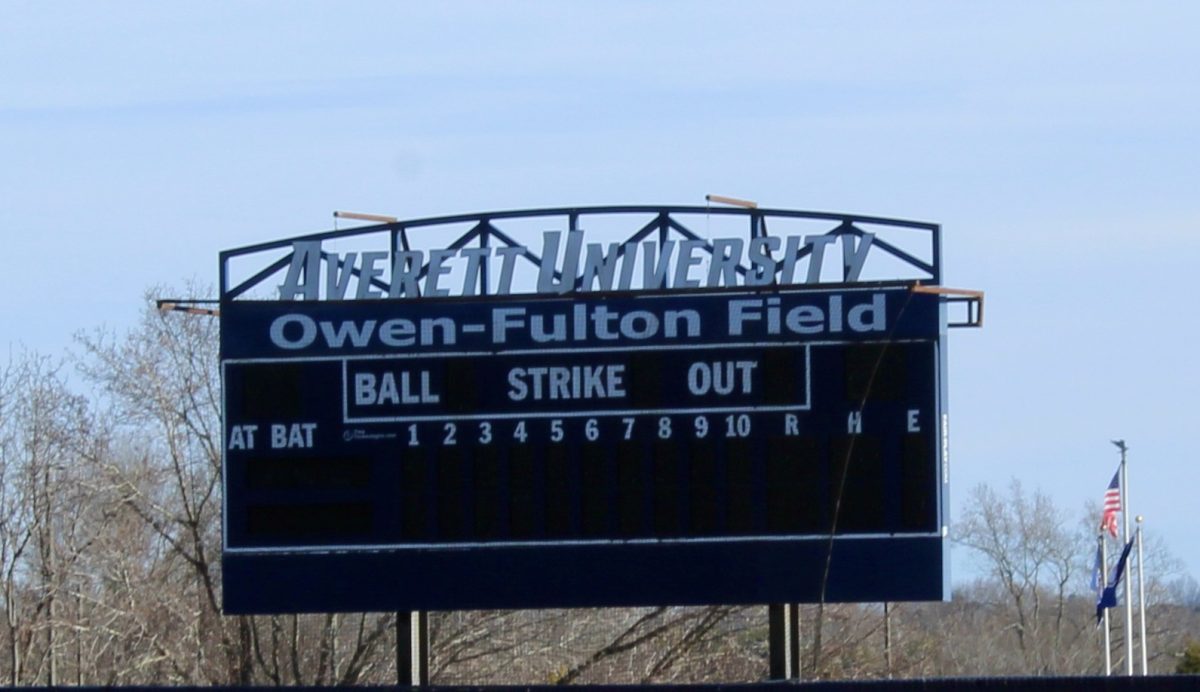
There was a moment that is buried somewhere between the 0-10 season and the quiet thought of walking away from football altogether when Patrick Bolen seriously considered leaving the game behind.
“This is miserable,” he remembers thinking. “This is the worst… I don’t want to do this anymore.”
It wasn’t supposed to last this long anyway. The plan had always been simple: spend two seasons at Averett, gain some college experience, then return home to take over as a defensive coordinator at the high school level. That was the path he had mapped out for himself; it was clear, practical, and temporary.
But football has a way of rewriting plans.
After that winless season, something in him refused to let the story end there. The frustration didn’t push him out; it happened to pull him deeper in.
“The competitor in me was like, I can’t leave it like that,” Bolen said. “I’ve got to leave it better than I found it.”
So he stayed. One more year turned into another. Then another. And eventually, it turned into a career.
Now, entering his 21st season and stepping into a new role as assistant head coach under Matt Quinn, Bolen’s story has become something much bigger than a timeline of seasons.
It has become a story about endurance, identity, and the kind of impact that doesn’t always show up on a scoreboard.
Built, Not Given
Bolen’s path to Averett wasn’t built on highlight reels or perfect opportunities; it was shaped by setbacks.
As a former offensive lineman who once had a chance to play at the next level, his career was cut short by a shoulder injury that cost him his scholarship. In an era before digital film and recruiting platforms, no second chances were waiting online; he only had VHS tapes, missed games, and a door that closed quicker than it opened.
That loss forced him to pivot, returning home and slowly working his way into coaching. What could have marked the end of his football career instead ushered in a new chapter.
“I learned early on you should take something from everybody,” Bolen said. “Whether it’s something you like or something you never want to do again.”
Over the years, that mindset became his foundation. Working under four different head coaches and nearly ten offensive coordinators, Bolen quietly built his own identity not by copying one philosophy, but by collecting pieces from all of them.
For former players, that consistency stands out more than anything.
“Bolen doesn’t change,” said Matthew Isom, a 2025 graduate. “The same way he coaches on the practice field is how he shows up on Saturdays; calm, consistent, and steady.”
Isom described practices under Bolen as demanding but intentional; there was never waste, never casualness.
“He coached practice like it was test day every single day,” Isom said. “We corrected mistakes the same way we would in a game. That allowed us to make mistakes, learn from them, and take control up front before we ever got to Saturdays.”
That approach didn’t just prepare players physically, but it also trained them mentally. Every rep mattered. Every detail mattered. And over time, that standard became the expectation.
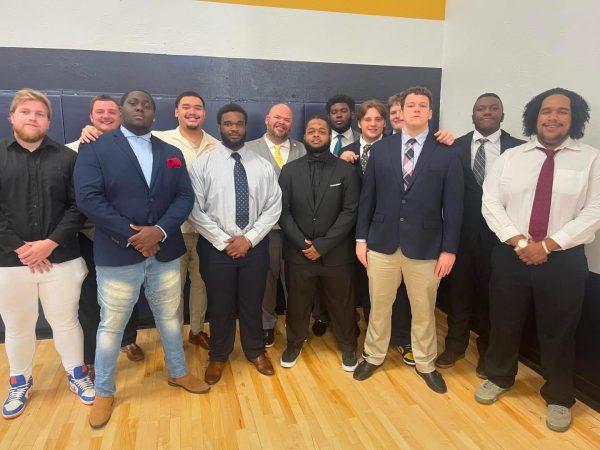
The Brotherhood: “B.T.N.”
Before the culture. Before the identity. Before the brotherhood, there was a problem.
Players weren’t staying.
Despite recruiting talent, the offensive line room lacked connection. There was no shared identity, no sense of belonging that made players want to endure the hard parts of college football.
So Bolen created one.
Big. Thick. Nasty.
“B.T.N. isn’t just a name,” Bolen said. “It’s a mindset. You might not be the biggest or the fastest or the strongest, but nobody’s going to be meaner than you.”
The emphasis wasn’t on size or ability. It was on effort and being relentless in a job that rarely gets recognized.
For players like Vincent Kettner, that mindset became transformational.
“A one-on-one conversation that stuck with me was my freshman year,” Kettner said. “I would mess up one play, and it would ruin the rest of practice for me. He told me perfection isn’t possible, but the goal is to get as close as you can. That changed everything.”
Kettner said the lesson went beyond football.
“He told me I was getting in my own way,” Kettner said. “That I was a good player, but when something bad happened, I turned into an average one. Learning to move on from mistakes helped me grow as a player and as a person.”
Isom saw the same culture from a different angle, one rooted in brotherhood.
“That brotherhood is real,” he said. “It’s not just a name. It played a major role in helping me navigate personal struggles.”
What Bolen created wasn’t just a position group.
It was something players carried with them long after they left the field.
Thursday Nights
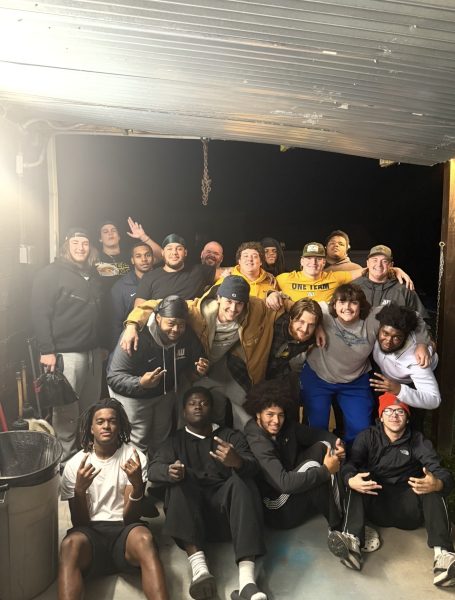
If B.T.N. gave the offensive line its identity, Thursday nights gave it a home.
Every week during the season, players gather at Bolen’s house for a simple meal: spaghetti. What began as a small attempt to build chemistry has evolved into one of the program’s most meaningful traditions.
“It’s about being bought in,” Bolen said. “The guys who show up, those are the ones who care.”
For players, those dinners became something far deeper than a weekly routine.
“They meant everything,” Isom said. “It was a chance to step away from football and just be around your brothers. That’s where relationships really grew.”
Those nights created space for connection, which turned out to be something that translated directly onto the field. Trust wasn’t just built in practice reps or game situations. It was built over plates of pasta, conversations, and shared experiences.
And the impact lasted.
“I’ve had guys tell me they might not have stayed if it wasn’t for those meals,” Bolen said.
Even former players who never experienced B.T.N. firsthand still contribute, sending food and supplies to keep the tradition alive, just a quiet testament to its meaning.
More Than a Coach
For the players who came through his program, Bolen’s impact rarely stopped at football.
“He was more like another father figure,” Kettner said. “Not everything was about football. He used real-life examples and showed us how to handle situations, how to lead, how to communicate, and how to be a man.”
Kettner recalled learning lessons that extended far beyond the field, all the way from understanding when to speak and when to listen to recognizing that leadership looks different for everyone.
“Not everyone has the same background,” Kettner said. “He taught us you can’t treat everyone the same way. That sticks with you.”
Isom experienced that same mentorship in moments of challenge.
“He always pushed me,” Isom said. “At first, it was pushing the starter. Then it was earning the job. Then it was becoming all-conference.”
But the moment that defined his experience came when Bolen trusted him with leadership before he believed he was ready.
“He pushed me to be a captain at 18 years old,” Isom said. “I didn’t think I was ready, but he saw something in me. That responsibility shaped who I became, not just as a player, but as a man.”
That trust, paired with accountability, defined Bolen’s approach.
“He demands perfection,” Isom said. “In 2023, we gave up only two sacks all season. But if you were around us, you’d think we gave up the most because the standard was zero.”
A Family Woven Into Football

Behind the coach is a life that has always been intertwined with the game.
Bolen’s wife, Heidi, has been there since the early days, long before the titles, the seasons, and the recognition.
“She’s my rock,” Bolen said. “She holds everything together.”
His children have grown up inside the program, surrounded by players who became extended family. His son Camden has spent countless hours on the sidelines and at practices, absorbing the culture in real time.
“I tell him all the time he’s getting a masterclass in teamwork,” Bolen said.
For his daughter Aubrey, a talented violinist who performs at both the high school and symphony level, the connection looks different, but no less meaningful.
Being a father has changed the way Bolen sees his players.
“You start to recognize things,” he said. “Sometimes you see that same look in a player’s eyes that you see in your own kid, and you realize you need to approach it differently.”
That perspective has made him not just a better coach but a more understanding one.
Still Chasing More
Even after 20 seasons, Bolen’s motivation hasn’t faded; if anything, it’s become more focused.
“Winning,” he said.
But for Bolen, winning isn’t just about Saturdays. It’s about the consistency it takes to get there, building from one week to the next, stacking habits, and finding a way to improve every time his players step on the field.
That mindset is something his players felt every day.
“He coached practice like it was test day every single day,” Isom said. “We corrected mistakes the same way we would in a game. That’s what made us ready.”
That preparation paid off in moments like the 2023 season, when the offensive line allowed just two sacks all year. But even then, the standard inside the room never changed.
“He demands perfection,” Isom said. “You would’ve thought we gave up the most sacks in the country, because the standard we were chasing was zero.”
That constant push is what still drives Bolen, especially as he steps into his new role as assistant head coach. While his responsibilities may grow, his identity remains the same.
“Give me my guys up front, and let me go to work,” he said.
For Bolen, there’s always something left to chase, whether it’s flipping a tough season into a winning one, breaking rushing records, or simply seeing his players succeed together.
“He always pushed the next level,” Isom said. “There was never a point where you felt like you had ‘made it.’”
The Legacy
For Bolen, success has never been defined by wins or accolades.
Instead, it’s measured in the relationships he’s built and the impact he’s had on the people who came through his program.
“If guys are still using something I taught them 20 years from now, that’s enough,” he said.
For former players, that impact is clear.
“He shaped me into the man I am today,” Kettner said. “It wasn’t just football; it was how to handle life, how to lead, how to carry yourself.”
Kettner pointed to the small lessons, learning not to let mistakes define him; understanding how to communicate with different people; and growing into leadership roles that stayed with him long after football ended.
“Learning to move on from mistakes helped me in everything,” he said.
Isom’s experience reflects that same influence, especially in the way Bolen trusted his players.
“He believed in me before I believed in myself,” Isom said. “Pushing me to be a captain at 18… that changed who I became.”
That kind of impact doesn’t fade when a player graduates. It carries into careers, families, and everyday life.
“He changed my life,” Isom said.
And in the end, that’s the legacy Bolen hopes to leave behind: not just better football players, but better people.